• Audit and Cancel Egypt's Debt

    On 31 October, a group of researchers, activists and civil society organizations will launch the Egyptian Debt Audit and Cancellation Campaign in coordination with international actions in Europe and Latin America. The main goal of the campaign is to audit and cancel Egypt's foreign debt that was accumulated under ousted President Hosni Mubarak. Based on credit that was extended to a dictatorial regime lacking even minimal standards of accountability, transparency and public oversight, this debt is considered "odious".

    Egypt's outstanding foreign debt hovers around $35 billion or 15 percent of the GDP. Some may contend that Egypt is not a heavily indebted country. Foreign debt stock (denominated in foreign currencies) is by no means huge as compared to countries with similar income. Foreign debt service has constantly decreased since the early 1990s. According to the Ministry of Finance, the ratio of foreign debt service (interest and installment payments) to exports was around 6 percent in July/August 2011, which is far from alarming.

    But foreign debt is only one side of the story. If domestic debt is considered as well, then Egypt is a heavily indebted country. Domestic debt, which refers to credit denominated in Egyptian pounds, stands at a massive 68 percent of the total GDP. This ratio exceeds the "safe limit" set by the...

  • An EIPR Researcher Tells the Story of His Journey from Military Police to General Intelligence to Al-Waely Police Department

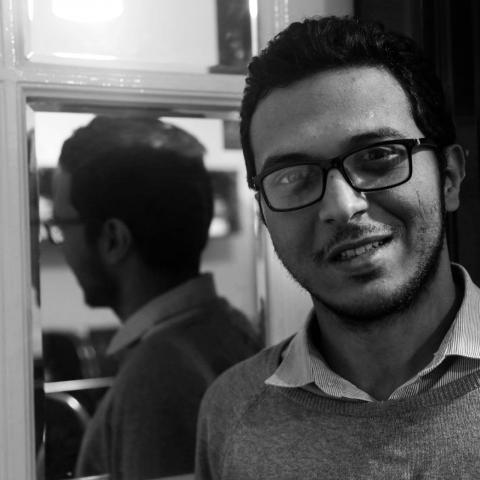
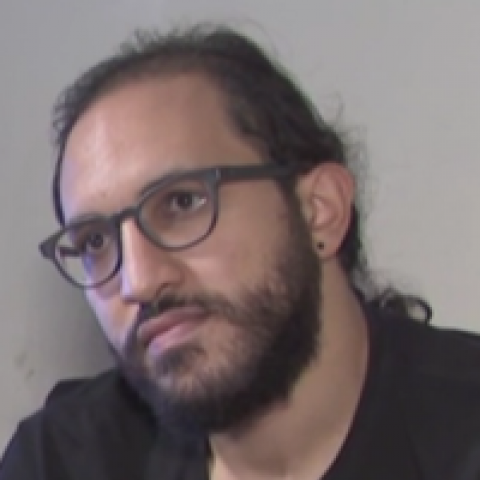
    Amr Gharbeia: I was kidnapped by unidentified people under the pretext I was a spy, and threatened with a knife as I was taken to different security agencies

    On the evening of the 23rd of July, a group of people abducted Amr Gharbeia, Technology and Freedoms Program Officer for the Egyptian Initiative for Personal Rights (EIPR), against the backdrop of the bloody battle of Abbassiya which took place on the evening of the 23rd July. The abductors decided he was a member of the April 6th Movement as well as being a spy, and that they had to take him to the military police.

    It all began when Amr and a number of his colleagues were participating in the march heading from Tahrir Square to the Military Council headquarters, which was intercepted violently in Abbassiya Square by people dressed in civilian clothing – most of them reckoned to be hired from outside the area. Security forces fired tear gas canisters, while the army maintained their negative neutrality, according to eyewitness reports.

    The smear campaign against Amr reached its nadir in his abduction and subsequent journey, in which he was taken from the headquarters of the military police and military investigations, to the general intelligence agency, to the al-Amiriyah police station, and then to the al-Waely police station in Abbassiya, in a series of ironic...

  • On AIDS-activism, Stigma, and the Struggle for Change

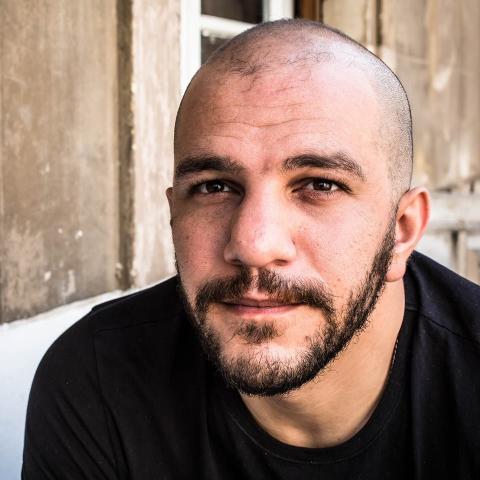
    I wanted to write about Magid even before he became a star. At this moment I'll hardly be the first one to have written about him but at least now I can justify why I wanted to write about this young man from Alexandria other than simply having immense admiration and respect for his character.

    I met Magid almost a year ago when we started working together through a civil society coalition, the Forum to Fight Stigma and Discrimination Against People Living with HIV/AIDS, of which our respective organizations are members. Magid is a 31 year old Egyptian man living with HIV. Now typically in most Arab countries that doesn't make for a star. People living with HIV/AIDS in Egypt have long been shun from society and harshly discriminated against. So bad was the stigma that never has anyone living with HIV been able to make a public appearance announcing their status. Which is precisely what makes Magid now a star.

    Only a few weeks ago Magid stood up at a podium in front of a room packed with press and journalists and publicly spoke of the burden of carrying a virus not-as-deadly-as- the-world -originally-thought and begged the audience to take a moment to reflect on the myths and misconceptions that surround it. The press conference was organized by the Forum which brings together 14 different organizations that work on issues related to HIV/...

  • In Post-Mubarak Egypt: Victim of Police Shooting is Detained for Assault

    EIPR senior researcher Sarah Carr reports from the Giza court.  

    Malek Adly, a lawyer with the Hisham Mubarak Law Center, is waiting inside the secretariat of the South Giza Chief Prosecutor for a chance to see the Chief Prosecutor. He is to launch an inquiry into why last month a traffic policeman shot Tuk-Tuk driver Mahmoud Sobhy twice and why Sobhy was then himself taken from hospital to a police station cell and charged with assault.

    Adly appeared about half an hour later. The Chief Prosecutor had not consented to see him in person and had sent him a message via an assistant: “We will look into the case if we see fit”.

    The lawyers’ outdoor café next to the courthouse is filled with brightly colored plastic furniture, like Lego. Mahmoud Sobhy’s 4-year-old son, a tiny frail boy, disappears amongst the furniture, brandishing an LE 10 note in the air as he chases a waiter asking for orange juice in an inaudible voice. He is ignored until his mother, Samar Abul Magd, intercedes on his behalf twenty minutes later.

    She continues describing how she heard about what had happened to Sobhy.

    “I got a call from a friend of Mahmoud’s asking me where I was. I heard people in the background saying, ‘don’t tell his wife, don’t tell his wife’”, Abul Magd says.

    On May 18 2011 Sobhy’s brother Hassan was...

  • Attacks on Mar Mina Church in Imbaba, Giza

    EIPR senior researcher Sarah Carr was in Imbaba last night and wrote the following account of the violent Muslim-Christian clashes that left at least 12 dead and over 200 injured.

    The Mar Mina Church is located on Loqsor St, a long unmade road from that branch off the warren of small alleys that make up Imbaba.

    Taxi drivers will not risk damaging their chassis here and instead Toctocs – motorised rickshaws – transport passengers over the bumps and potholes.

    We arrived at around 11 p.m. and found a wall of people assembled around 100 metres away from the church, held back by three army armed personnel carriers and a row of riot police – armed with batons and tear gas but apparently doing nothing; the sound of gunfire rang out regularly from behind the cordon.

    We spoke to a man, Amir Maurice Aziz, who said that he had witnessed events since they began at 4 p.m. He told us that an armed group of Salafis attacked the church “because they wanted the woman that converted to Christianity”.

    “They say that the priests are holding the woman inside the church”, Aziz said.

    All of the people spoke to said that the events began the same way; with a rumour that a woman,...

  • Healthy Discussions

    When I arrived (late) at the Doctors’ Syndicate general assembly on Friday it was in uproar.

    Syndicate head Dr Hamdy El-Sayyed was conspicuously and predictably absent from the podium. After losing his seat in the 2010 parliamentary elections (a seat he held for three parliamentary terms) El-Sayyed was then subjected to the indignity of being booted out of his Syndicate headquarters office by doctors demanding that he step down.

    El-Sayyed has been head of the Syndicate for four successive terms. Elections haven’t been held since the early 1990s. In 1995 amendments to the law resulted in the boards of several Syndicates including the Doctors’ Syndicate being “frozen”. The amendments were held unconstitutional in January of this year.

    In the meantime doctors had over a decade of that spectral man staring out unblinkingly from behind his glasses and blocking any genuine attempt to improve doctors’ wages and conditions where it meant a confrontation with the National Democratic Party, of which he is a member.

    In its basest form this took the form of legalistic obfuscation and subterfuge, as in March 2008 when doctors voted overwhelmingly for symbolic strike action in a heated general assembly. The vote was...

  • It’s Time to Review Our Foreign Policy

    Two weeks before he accepted the post of Minister of Foreign Affairs in the transitional government, Minister Nabil el-Araby wrote an article in the Al Shourouk daily newspaper outlining necessary changes that are needed for the foreign policy of a post-revolutionary Egypt. Below is an unofficial English translation of the article prepared by the Egyptian Initiative for Personal Rights. The original article (in Arabic) could be found here.

    It’s time to review our foreign policy
    Nabil el- Araby
    Al Shorouk, 19 February 2011

    The white revolution led by the January 25 youth and supported by all segments of the Egyptian people was a defining historical moment and will always remain a beacon lighting the path for all peoples of the world.

    The revolution holds many important lessons that will no doubt occupy political analysts in the halls of government and academia for years to come.

    Now we are at the beginning of a new phase in which everyone hopes that Egypt will be blessed with good governance that achieves a sound democracy, respect for human rights and equality for all without discrimination. The mission now is to establish a modern, secular state in which the rule of law holds sway and...

  • Behind the Sun

    An Egyptian human rights worker takes a walk inside the abandoned State Security Investigations headquarters.

    I used to love entering abandoned buildings as a kid, for the adventure and the thrill of finding belongings left behind, clues to the untold stories silenced by the walls. Yesterday I entered an abandoned building that contains a million stories, all of them of deceit, pain and power.

    The Nasr City State Security Investigations (SSI) headquarters is a peculiar fortress-like building combining drab box like buildings with the sensuous curves of gun turrets and the circular building at its centre. A friend of mine who was kidnapped and detained there in 2009 says that while blindfolded he was repeatedly forced to walk round on a circular path. Maybe that was one of its uses. Exercise.

    Protestors, watched by the army, entered the building around 6.30 p.m. The protest had begun at 4 p.m. A relatively large number of the protestors were men with beards and therefore fitted the profile of Nasr City State Security’s main clientele; individuals identified as “Islamist” and therefore legitimate targets by security officers. Emergency law powers allow state security officers to operate with virtual impunity, and the results of this policy entered the building yesterday, furious and defiant.

    It was mayhem...

  • Egypt Revolution 2011 and Communications

    Communications and online platforms have played very important role during the Egyptian Revolution between all entities and individuals.

    The invitation to demonstration started online through Facebook events and Twitter using the hash-tag #Jan25, to demonstrate during the National Police Day 25 January 2011 mainly against corruption, unemployment and torture in Egypt. The invitation spread very widely among the Egyptian netizens and many political groups and parities adopted the invitation and it was spread offline.

    Before January 25, the reasons for the demonstrations started to increase and develop quickly until it all was formulated under one umbrella: People Demand Removal of the Regime.

    Invitations to the demonstrations with time and locations spread widely using short message service (SMS) and emails. An online platform was also developed to compile chants by Egyptians to make it easier for people joining peaceful assemblies to use the slogans in different ways.

    The Front to Defend Egypt Protesters (FDEP), network of more than 30 human rights organization and legal in Egypt to provide informative and legal aid to participants in peaceful...

  • What Mubarak Must Do Before He Resigns

    As Egyptian citizens and human rights defenders, we have been on the streets here, including in Tahrir Square, since Jan. 25 to demand dignity and freedom for all Egyptians. There is nothing we want more than an immediate end to the Mubarak era, which has been marred by repression, abuse and injustice. We are heartened by the international community's shift from demanding "restraint" and "responsiveness" to echoing our call for Hosni Mubarak to step down and for an immediate transition toward democracy.

    But for a real transition to democracy to begin, Mubarak must not resign until he has signed decrees that, under Egypt's constitution, only a president can issue. This is not simply a legal technicality; it is, as Nathan Brown recently blogged for ForeignPolicy.com, the only way out of our nation's political crisis.

    Egypt's constitution stipulates that if the president resigns or his office becomes permanently "vacant," he must be replaced by the speaker of parliament or, in the absence of parliament, the chief justice of the Supreme Constitutional Court. In the event of the president's temporary inability to exercise his prerogatives, the vice president is to take over as the interim head of state. In both cases a new president must be elected within 60 days. Significantly, the constitution prohibits the interim...